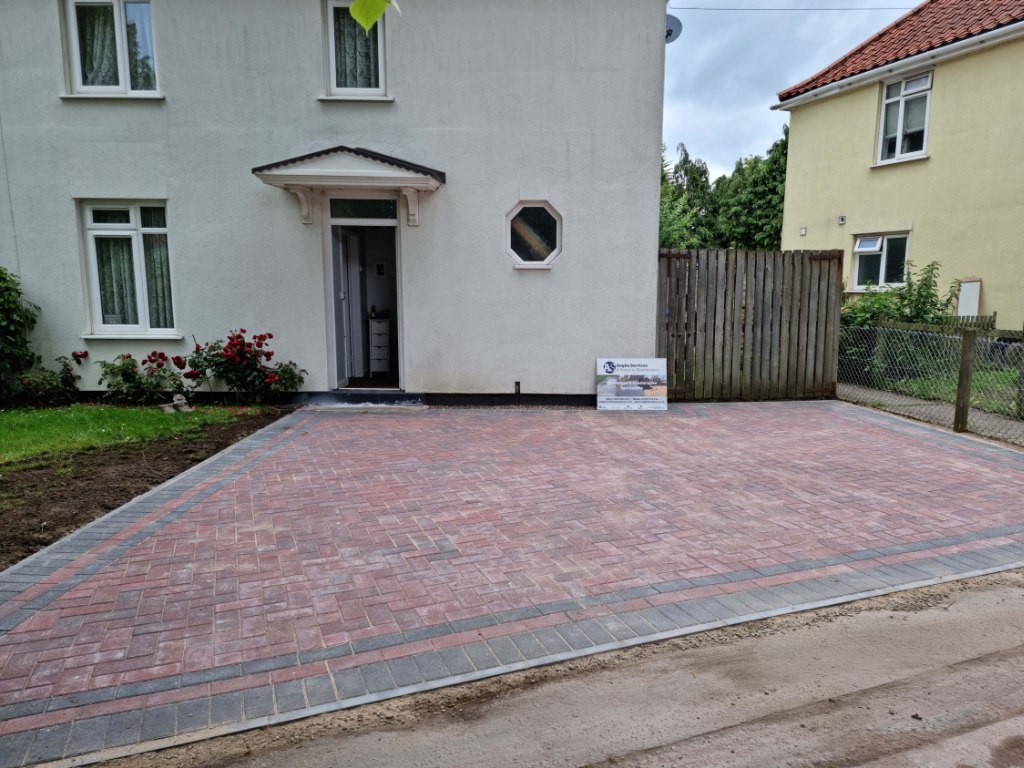
Can Your Block Paved Driveway Be Improved Without Changing Its Overall Design?
A block paved driveway can remain practical and well suited to a property even after individual areas begin to look tired or develop minor defects. Slight settlement, uneven blocks, deteriorated joints or an untidy surface do not necessarily mean that the complete driveway needs to be redesigned.
For homeowners in Royston, Hertfordshire, one of the advantages of block paving is that individual sections can often be addressed while retaining the established layout. When the overall design still works well, carefully planned improvements can restore appearance and performance without unnecessarily changing the character of the driveway.
Improving an Existing Block Paved Driveway Without Redesigning It
Yes, an existing block paved driveway can often be improved while keeping its overall design. The most appropriate approach depends on what has caused the deterioration and whether the supporting construction remains suitable.
Unlike a continuous surface, block paving consists of individual units laid within a structured system. This can make it possible to lift and reinstate particular areas, correct localised problems and retain blocks that remain in good condition.
Before work begins, however, the driveway should be assessed carefully. Improvements are most successful when the cause of any movement or deterioration is addressed rather than simply making the surface look better temporarily.
Start by Assessing What Actually Needs Improvement
A driveway can look generally tired even though much of its construction remains perfectly serviceable.
The first step should therefore be to identify which elements genuinely require attention. Typical concerns can include:
- Localised sunken blocks
- Small areas of uneven paving
- Worn or missing jointing material
- Loose blocks
- Weeds or organic growth within joints
- Poorly defined edges
- Isolated surface staining
- Areas that retain water
- Previous repairs that no longer sit evenly with surrounding paving
Once these issues have been identified, it becomes easier to determine whether focused remedial work can improve the driveway without altering its established design.
Localised Sunken Areas Can Often Be Reinstated
Settlement is one of the more noticeable problems that can develop within block paving.
A small section may gradually become lower than the surrounding driveway, creating an uneven appearance and potentially allowing rainwater to collect. Simply adding material to the top does not address why the blocks have moved.
Because block paving consists of individual units, affected blocks can often be carefully lifted so that the area underneath can be assessed.
Where the problem is genuinely localised, the supporting layer can be corrected before the blocks are reinstated at an appropriate level. This allows the existing paving pattern to be retained while addressing the defect beneath it.
Uneven Blocks Should Be Investigated Rather Than Ignored
Minor variations in level can gradually become more pronounced if the underlying cause continues.
Movement may result from localised settlement, inadequate support or deterioration beneath a particular section. The important point is to establish whether the problem affects only a contained area or indicates a wider weakness within the driveway construction.
If surrounding sections remain stable, targeted work may be sufficient.
Where unevenness is developing across large parts of the driveway, a broader assessment may be required before deciding how much of the existing paving can sensibly be retained.
Existing Blocks Can Often Be Reused
One useful characteristic of block paving is that serviceable blocks do not necessarily need to be discarded simply because the construction beneath them requires attention.
Where blocks remain suitable, they may be lifted and reinstated after the underlying area has been prepared correctly.
This can help preserve the existing paving pattern and overall appearance.
It is particularly useful when homeowners are satisfied with the established design and simply want the driveway to look neater and perform more consistently.
Jointing Plays an Important Role
The joints between paving blocks may appear to be a relatively small detail, but they contribute to the overall performance of the surface.
Over time, jointing material can become depleted. When this occurs, the paving may look untidy and unwanted growth can become more noticeable between the blocks.
Restoring joints appropriately can improve both the appearance and integrity of an otherwise sound driveway.
However, recurring loss of jointing material should not automatically be treated as an isolated cosmetic issue. If blocks are moving significantly, the underlying reason for that movement should also be investigated.
Cleaning Can Reveal the Driveway’s True Condition
Outdoor paving naturally accumulates dirt and organic material over time.
This can make an otherwise serviceable driveway appear considerably more worn than it actually is. Appropriate cleaning can reveal the original appearance of the paving and make it easier to identify areas that genuinely need repair.
Cleaning should still be approached carefully.
The objective is not simply to remove visible dirt but to improve the surface without unnecessarily disturbing joints or surrounding features. Once cleaned, any repairs and reinstatement work can be planned around the actual condition of the blocks.
Edges Can Be Improved Without Changing the Main Layout
Driveway edges provide definition and help the paved area feel properly contained.
If edging has become loose, uneven or poorly defined, the entire driveway can appear untidy even when the central paving remains in reasonable condition.
Correcting these areas can make a significant visual difference without changing the original driveway shape.
Edge condition can also affect performance. Blocks near unsupported or deteriorated boundaries may be more likely to move, so addressing the perimeter can form an important part of improving the existing surface.
Drainage Problems May Require Changes to Local Levels
One reason homeowners sometimes consider redesigning an existing driveway is standing water.
However, localised water retention does not always mean the complete layout is unsuitable. A small depression or section of settled paving may simply have altered the intended surface levels.
Where appropriate, affected blocks can potentially be lifted and reinstated to improve the local profile.
The wider drainage arrangement still needs to be considered. If water problems affect numerous areas, simply adjusting one section may not provide a complete solution.
Previous Repairs Can Often Be Made More Consistent
Block paved driveways sometimes contain repairs carried out at different times.
Although these areas may remain functional, changes in level, alignment or jointing can make them stand out from the surrounding surface.
A professional assessment can determine whether these sections can be lifted and reinstated more consistently with the original paving.
The aim is not necessarily to make every block appear new. Established paving naturally changes in appearance over time. Instead, attention should focus on achieving a stable, coherent and properly aligned surface.
The Original Paving Pattern Can Usually Be Retained
Homeowners may be reluctant to undertake driveway improvements because they like the existing pattern, borders or general arrangement.
Where the design remains suitable, there may be no reason to change it.
Careful lifting and reinstatement can preserve established laying patterns while correcting problems beneath selected sections. Borders and other design details can also be retained where they remain secure and appropriate.
This makes block paving particularly adaptable when the objective is improvement rather than complete transformation.
Not Every Block Needs Replacing
Individual blocks can sometimes become damaged while the surrounding paving remains sound.
Where suitable replacements can be integrated appropriately, attention can be focused on those particular units rather than unnecessarily disturbing large sections.
The condition of neighbouring blocks should still be checked.
If widespread deterioration is present across the surface, replacing individual blocks may offer limited benefit. Where damage is genuinely isolated, however, selective replacement can form part of a proportionate improvement programme.
The Base Beneath the Paving Matters Most
The visible blocks are only the finished surface of a block paved driveway.
Their long-term stability depends heavily on the construction beneath them. If the supporting layers have moved or become unsuitable, simply rearranging the blocks will not resolve the underlying weakness.
This is particularly important where the same area has been repaired more than once.
Repeated movement can indicate that attention needs to extend beneath the paving. Correcting the cause provides a stronger basis for reinstating the existing blocks successfully.
When Is a Larger Area of Reinstatement Needed?
Sometimes investigation reveals that deterioration extends further than initially expected.
Several neighbouring sections may have settled, levels may have changed significantly or movement may be affecting a wider proportion of the driveway.
In these circumstances, lifting and reinstating a larger area may provide a more reliable result than repeatedly repairing small patches.
This still does not necessarily mean changing the overall driveway design. The existing shape, paving arrangement and usable materials may often be incorporated into the renewed area.
When Might Keeping the Existing Design Be Less Suitable?
Retaining the original layout makes sense when it continues to meet the property’s practical requirements.
If the driveway has become difficult to use because its dimensions, access arrangement or general layout are no longer suitable, addressing surface defects alone will not resolve those limitations.
Likewise, widespread failure beneath the paving may require more extensive reconstruction.
The decision should therefore be based on both condition and function. There is little value in changing a design that continues to work well, but equally, an unsuitable layout should not be preserved simply because it already exists.
Professional Block Paving Improvements in Royston, Hertfordshire
At Royston Driveways, we assess existing block paving to determine what can be retained and where remedial work is genuinely required.
By considering block condition, levels, joints, edges and the supporting construction, it is possible to distinguish between localised defects and wider problems. This helps ensure that serviceable areas are not disturbed unnecessarily while important underlying weaknesses are properly addressed.
For homeowners in Royston, Hertfordshire, this can provide a practical way to improve an established driveway while maintaining the design and character that already suit the property.
Conclusion
A block paved driveway does not necessarily need a completely new design simply because it has become tired, uneven or affected by localised deterioration. One of the advantages of block paving is its ability to be lifted, adjusted and reinstated in selected areas while retaining serviceable materials and the established layout.
The best approach depends on understanding why deterioration has occurred. Local settlement, worn joints, damaged blocks, deteriorated edges and uneven levels can often be addressed individually when the wider driveway remains stable.
If your block paved driveway in Royston, Hertfordshire needs attention but you would prefer to retain its existing design, contact Royston Driveways. We can assess the condition of the paving and determine which improvements are appropriate while preserving sound sections wherever practical.
Call us on: 01763 295 192
Click here to find out more about Royston Driveways
Click here to complete our contact form and see how we can help with your driveway needs.